Cinema Crespodiso

A weekly talk show hosted by film critic Christopher Crespo

  • HOME
  • MOVIE REVIEWS
    • Action
    • Animated
    • Comedy
    • Documentary
    • Drama
    • Foreign
    • Horror
    • Independent
    • Science Fiction
    • Thriller
    • Western
  • PODCAST
    • Cinema Crespodiso New Episodes
    • Cinema Crespodiso Bonus Episodes
    • Cinema Crespodiso – 2018
    • Cinema Crespodiso – 2017
    • Cinema Crespodiso – 2016
    • Cinema Crespodiso 2015
    • Cinema Crespodiso 2014
    • Cinema Crespodiso 2013
  • NETFLIX PICKS
    • New Picks
    • Netflix 2016
    • Netflix Picks – 2015
    • Netflix Picks – 2014
    • Netflix Picks – 2013
  • BLOG
    • Best Movies of 2015
    • Best Movies of 2014
    • Best Movies of 2013
    • Book to Film Adaptations
    • Crespo Guest Appearances
    • Florida Film Festival Coverage
    • Op-Ed
    • Talking Trailers

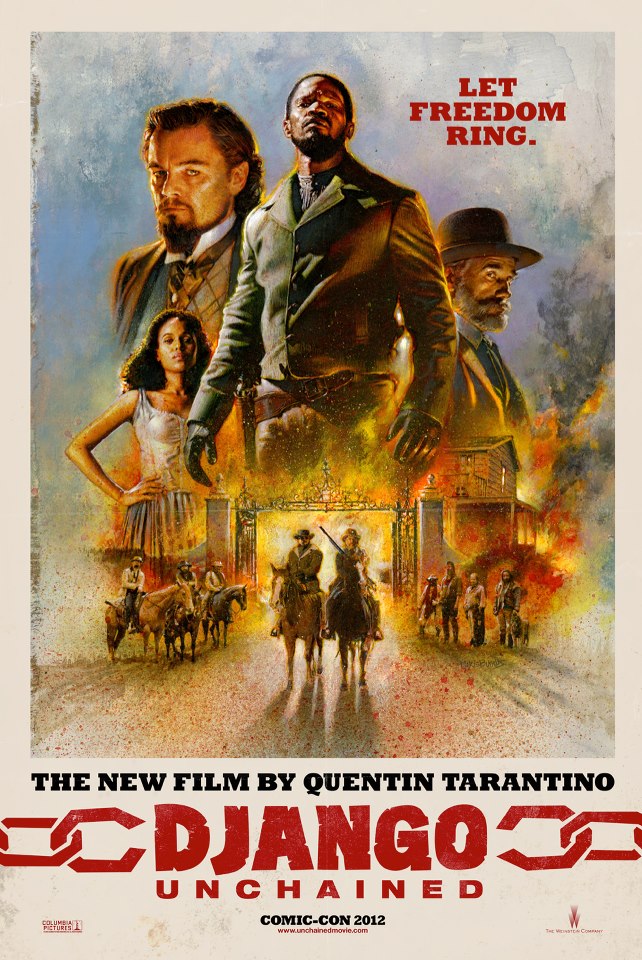
Netflix pick for 11/3/14 – ‘Django Unchained’

Django 1

“Django Unchained” is one of Quentin Tarantino’s crazier movies, and this is coming from a guy known for his cinematic flights of fancy involving quick dialogue, hard violence and clever stories. Equal parts Western and 1970’s blaxploitation, with a Southern antebellum twist, this is a crazy, fun, disgusting, thrilling, saddening, maddening and uplifting movie, all rolled into one glorious blood splatter package.

Jamie Foxx is the titular Django, a name used since 1960’s spaghetti westerns from Italy and usually reserved for the most hyperviolent westerns, and he lives up to the name when he dispenses with the righteous vengeance and furious anger which is much deserved by the nearly inhuman antagonists of this slave trade revenge fantasy tale. And for the second Tarantino movie in a row, Christoph Waltz shows up and kinda steals the show in his supporting role as the good doctor who frees Django and helps train him to become a bad ass bounty hunter. If you really want to go deep with me on this one and see what I think, you can check out my review here from when the movie originally came out in 2012. Rest assured, I only like the more now than I did then.Continue Reading …
Review: ‘Django Unchained’

django-unchained-poster-mike-butkus-02

Originally published on Examiner.com on December 29, 2012

In the fastest cinematic 165-minutes this side of “Cloud Atlas,” Quentin Tarantino has ridden back into town with his latest explosive and (as per usual) controversial film, this time set in the old 1850s South, a grand mash up of 1960s spaghetti westerns and 1970s blaxploitation slave narratives, sprinkled with modern music and drenched with enough fake blood to fill Shamu’s biggest water tank. Equally thrilling and appalling, “Django Unchained” exists as a film unlike any other, a monumental work of art that has left a swath of ardent lovers and haters in its wake.

The story is sprawling, as Django goes from a downtrodden and beaten slave afraid to look another man in the eyes to a bad ass, gun wielding, tough as nails bounty hunter over the course of at least a long winter and the spring, finding himself empowered by a pistol and the criminal justice system (conservative Republicans should absolutely love this aspect). And of course the whole time he has his eyes set on his prize, the opportunity to retrieve his wife from the hellhole that is Candyland and to simply live happily ever after. Django isn’t trying to overthrow the whole of slavery, nor does he want to cut down every white man he sees; he just wants what any person in this world wants, the opportunity to be happy and live his life in peace with the one he loves. Of course now this seems like something many of us take for granted, but in the southern US in 1858 this was a pipe dream for many people solely because of the color of the skin, and for Django this is the ultimate prize, the ability to simply live his life without fear.

“Django Unchained” has all the hallmarks of a typical Tarantino joint. The verbose dialogue is in full effect, and outside of Samuel L. Jackson, no one delivers Tarantino’s words like Christoph Waltz, as he has the same ability as Jackson to make Tarantino’s very particular brand of cinematic speaking come across as his own words, instead of sounding like the hyper stylized dialogue that it actually is. Tarantino also has a knack for rounding out his casts with superb actors, so in addition to both Waltz and Jackson doing what they do so very well, Foxx totally nails Django and successfully portrays the transformation from a meek and beaten down man to master of his own domain, and DiCaprio plays a character far more sinister and despicable than he has every done before and does so with great aplomb, as he seems to relish the opportunity to finally play someone so outright evil and dastardly as Calvin Candie. And playing the smaller parts are people like James Remar, M.C. Gainey, Don Johnson, Jonah Hill, Walton Goggins, Tom Savini and Bruce Dern, as well as Tarantino regulars Zoe Bell and the always watchable Michael Parks. Pretty much everywhere you turn there is someone being great, like when original “Django” actor Franco Nero makes a pretty sweet cameo (one surely lost on over 90% of the audiences seeing this movie).

And then of course the entire soundtrack for this movie is just as good as it gets, as Tarantino has always been a master of re-appropriating both pop songs and songs from other film scores for his own purposes. So whereas someone else would think that a brutal spaghetti western would not benefit from Jim Croce tunes, Tarantino places one front and center. And really, how big are this guy’s balls that he actually used the live recording of Richie Havens’ “Freedom” from Woodstockfor this movie, and how amazing is it that it actually works so damn well? And while hip-hop would normally feel needlessly anachronistic for a film set in the middle of the 19th century, Rick Ross’ “100 Black Coffins,” written and produced specifically for this movie at the request of Jamie Foxx, fits so perfectly with the movie itself that it hurts.

Finally there’s Tarantino’s trademark violence, which goes back through each and every one of his films, and just when the ridiculously bloody “Kill Bill” and the insanely violent “Inglourious Basterds” seemed like the pinnacle for how far he could push cinematic violence, along comes “Django Unchained” with it’s jet-powered squibs creating the biggest explosions of blood and viscera ever seen in a movie like this. Starting with the opening scene, when someone gets shot they don’t just get shot and there isn’t just a little puff of blood mist – no, instead there are geysers of thick, viscous blood, as people literally explode when they are shot, with viscera literally coating the walls. Of course much of this violence is hard to watch, especially the recreations of what happened to slaves and how incredibly poorly they were treated, and these violent actions against the slaves don’t need exaggeration as they are horrible all ready, and there is a great possibility that this particular stuff might have even been pulled back a bit to save the audience a bit. While Tarantino definitely wants you to see that slaves faced dangers like being torn apart by vicious dogs, he mercifully only shows something like this in snippets and in tight close ups, not rubbing the audiences’ noses in this extreme violence because he knows we get it and he knows that we know it’s horrible. This entire film walks a tricky tightrope between giving the audience the cathartic violence that it wants and not going overboard with the terrible violence against slaves whose only sins were being born black and in this time period.

There are also the comedic aspects of the film, which itself would throw some people who would wonder why a movie about slavery in America would have any humor or comedy in it at all. But in this case it feels like the comedy is almost necessary, because with the story that Tarantino sets out to tell, there are a lot of gruesome and horrible things involved, and at almost three hours, is there anyone out there who wants to see such a long, brutal, hard movie with no relief in sight? So right away in the opening scene, mostly through dialogue and characters’ reactions to each other, there is humor, used to lighten the proceedings just a little. And at times the comedy was used to subvert some evil iconography that we are used to seeing, as in a scene in which a large group of pre-KKK regulators don masks in order to round up and kill Schultz and Django, only to spend five minutes bitching about said masks and how poorly they were made, rendering them blind. In this instance Tarantino used humor to undermine these racist, violent idiots, showing them to be a bunch of moronic whiners while they see themselves as superior.

This does lead us to the nationwide discussion of the point of this movie, that is to say, why did Tarantino feel the need to make this movie in the way that he did. Because while he did make a movie that prominently features the slavery system that we here in America are so quick to pretend never happened, he also made a movie that is unabashedly entertaining, and this has rubbed some people the wrong way. Most famously filmmaker Spike Lee, himself an incredible talent and a very intelligent person, has publicly boycotted the movie, insisting he would not see it because he does not appreciate Tarantino appropriating the history of his ancestors for a movie like this.

But is this fair? Setting aside the fact that Spike Lee has not actually seen the movie and insists on judging it without seeing a single frame (which is extremely silly and wrong headed), he is indeed entitled to his opinion that he does not want to see slavery turned into entertainment. But does this mean he doesn’t want to see any movies at all involving slavery? Surely there are people who would definitely prefer this, because there are people who do not want to be reminded that their great-great-great-great grandparents were despicable, racists, dehumanizing, bigoted, moronic assholes. But this can’t be preferable. There is no way Spike Lee wants filmmakers to ignore this horrible period of history, so that means the alternative is to only make movies about slavery that are deathly serious from start to finish. Basically more “Amistads” and “The Color Purples” and “Roots” because apparently slavery is that much off limits that it can only be approached from a purely intellectual standpoint, at an emotional distance, and without a trace of entertainment.

Of course this is ridiculous position for any filmmaker to take, because why does Spike Lee believe that Tarantino cannot make an entertaining movie about racism in the 1850s, but believe that he should be allowed to make entertaining movies about racism in the 1980s? “Do the Right Thing” and “Jungle Fever,” among other Spike Lee movies, are explicitly about racial tensions between different groups of people, and both movies are very entertaining while also showing some horrible stuff, so why does Lee believe that he can make a movie about racism and not Tarantino? It is because Tarantino is white and Lee thinks that only black filmmakers can make movies about black people? Because that itself is a racist idea, claiming that this time of history can only be explored by black artists. And this also ignores the fact that slavery and racial segregation is not the sole province of the American people, as this goes back to the beginning of time. For centuries and centuries, whether it be Jewish people enslaved by Egyptians or white Christians being thrown to the lions by the Romans for sport, large groups of people have been shitting on other large groups of people for superficial reasons. It is bullshit, it’s horrible, and worst of all, it’s life.

And that’s always been what movies have been about, a reflection of the human experience, as seen through the prism of the eyes of the filmmakers. And oppression is a universal experience, whether it be racially-based, economically-based, or otherwise. Since this terrible aspect of the human experience is indeed a large part of life, whether we like it or not, it needs to be reflected in our art, and this art should not be restricted to certain races or groups of people, because that itself is a prejudicial concept. So while “Django Unchained” does deal specifically with the American slavery system of the 1800s, the themes of the film extend to the terrors of human existence in general. In a movie where living black men are sold for hundreds of dollars while dead white men are sold to the criminal justice system for thousands of dollars, it is easy to see the message that to many people life is cheap and the lives of those different from us are even cheaper, and this is absolutely not relegated to this one time period.

Despite being enormously entertaining, the best thing about Tarantino’s “Django Unchained” is how it has fostered such discussions and debates such as this, not only among people like Spike Lee who haven’t seen the movie (and really whose opinions need to be taken with a big grain of salt due to their admitted lack of knowledge on the specifics of the content of the film itself), but among the many who have seen the movie, as the interwebs is now littered with both thoughtful and inane opinions of what this movie means and how it fits into the larger cultural landscape. When a daring and bold piece of art like this is unleashed and it makes people actually talk about its impact and the content of the film itself, that is a win for everyone involved. We should all be so lucky to get one movie a year like this that inspires so much debate, and in the end, love this movie or hate it, we are all the better for it because of it has inspired. That is the mark of a great film.

Continue Reading …

#95 – Trigger The Movie

http://media.blubrry.com/cinemacrespodiso/chriscrespo.com/wp-content/uploads/2014/11/CinemaCrespodiso_Episode95_2Nov2014.mp3

Podcast: Play in new window | Download | Embed

Subscribe: Apple Podcasts | Spotify | TuneIn | RSS

Episode95_TriggerTheMovie(Right Click Download Link To Save)

In episode 95, Chris Crespo and Drewster Cogburn are joined by returning guest music video director extraordinaire Carl Verna.

Carl promotes some of his current projects including Trigger the Movie, and Chris and Drew review The Zero Theorem and Nightcrawler.

Also discussed in this episode:

“Terminator Genisys” plot deets, DC vs Warner vs Fox and the Superhero movie gauntlet, Judge Dredd: Superfiend, MPAA and NATO bans Google Gloass, Seth Rogen IS Steve Wozniak, “Hail, Caesar!” in 2016, Jordan Peele does horror, and much more!

Continue Reading …

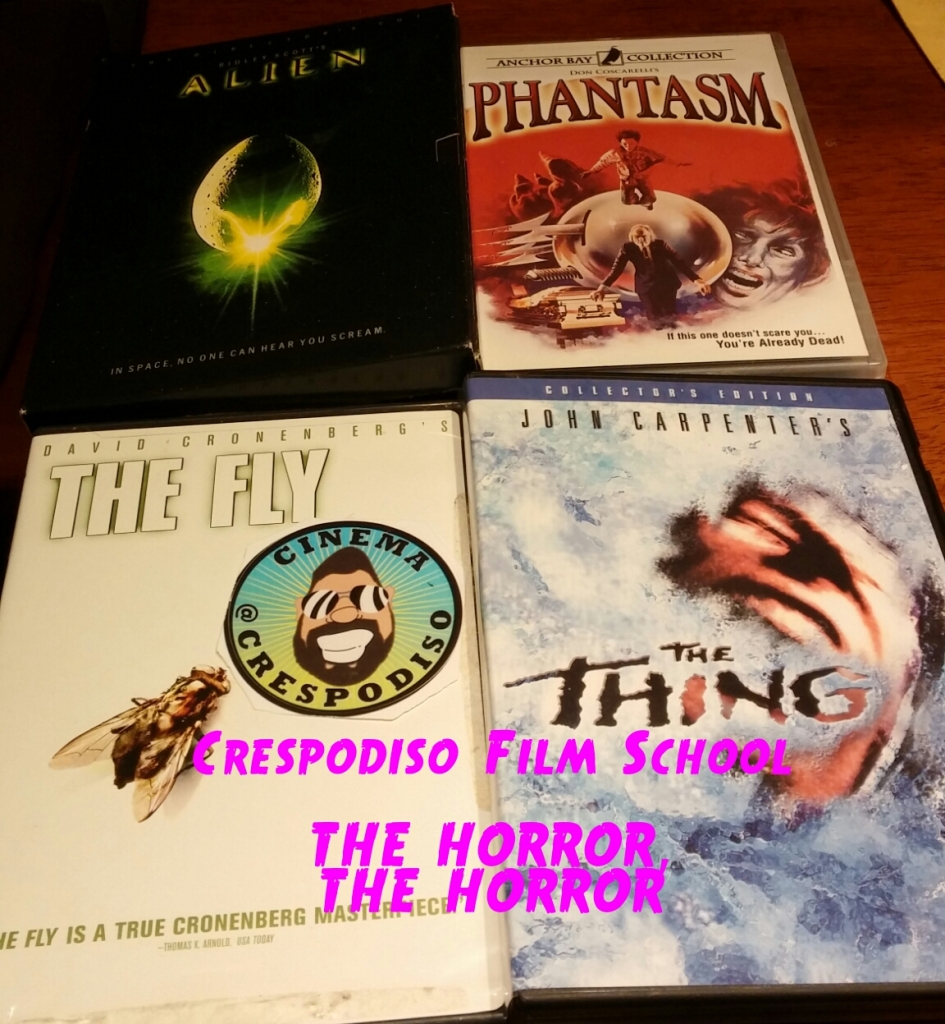
Crespodiso Film School – The Horror, The Horror

http://media.blubrry.com/cinemacrespodiso/chriscrespo.com/wp-content/uploads/2014/10/CrespodisoFilmSchool_HorrorFilms.mp3

Podcast: Play in new window | Download | Embed

Subscribe: Apple Podcasts | Spotify | TuneIn | RSS

Crespodiso_FilmSchool_Horror(Right Click Download Link To Save)

In this bonus episode, Chris Crespo goes through the history of horror films, from the 1890’s through today, and Chris Crespo and Drewster Cogburn go over their top five horror movies ever, as well as TWO top five horror lists from Billy D. in New York City.

Enjoy.

Continue Reading …

Review: ‘St. Vincent’

StVincent_Poster

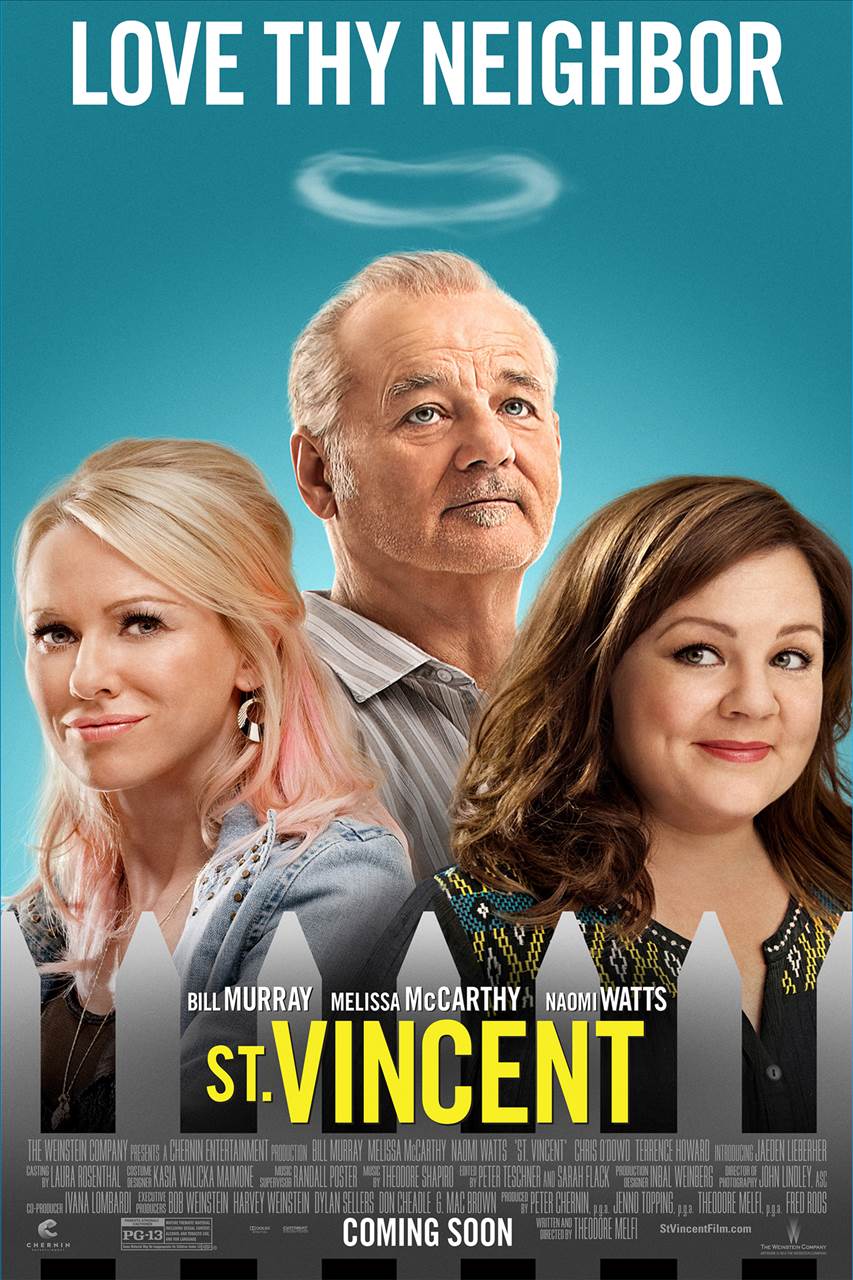
“St. Vincent” is one of those movies that starts out ostensibly as a comedy, and how can it not with Bill Murray playing the lead role, but then makes its way into heavier themes and moments, leaving most of the comedy behind for the anguish and tragedy, you know, the rest of the stuff that makes up this crazy thing we call life. The resulting thing is the ugly word “dramady,” which we should replace with another word so as not to have to use that stupid word ever again, because what exactly is the laughs-to-scene ration needed to tip a film’s scales from “comedy” to “dramady,” if not into straight up “drama?” Can we just call these movies “true to life?” Because like life, it is often hilarious and often sad and sometimes both at once. That is “St. Vincent.”

Vincent (Murray) is a drunk. His only “friends” are the nameless fellow regular patrons at his favorite bar and the Russian prostitute (Naomi Watts) who is pregnant with what may or may not be Vincent’s child. He is mean to everyone, has no money, and is much debt thanks to a bad gambling habit. Suffice to say, the dude has issues. And then one day a new neighbor moves in to the house next door, a single mom named Maggie (Melissa McCarthy) and her 12-year old runt of a son Oliver (newcomer Jaeden Lieberher), and before long old Vincent finds himself hanging out with impressionable Oliver, and they become buddies. Vincent shows Oliver how to gamble and how to break someone’s nose (for self defense purposes, of course) and Oliver, like, helps Vincent how to feel again. And stuff.Continue Reading …

Netflix Pick for 10/27/14 – ‘Robot & Frank’

robot_and_frank_poster

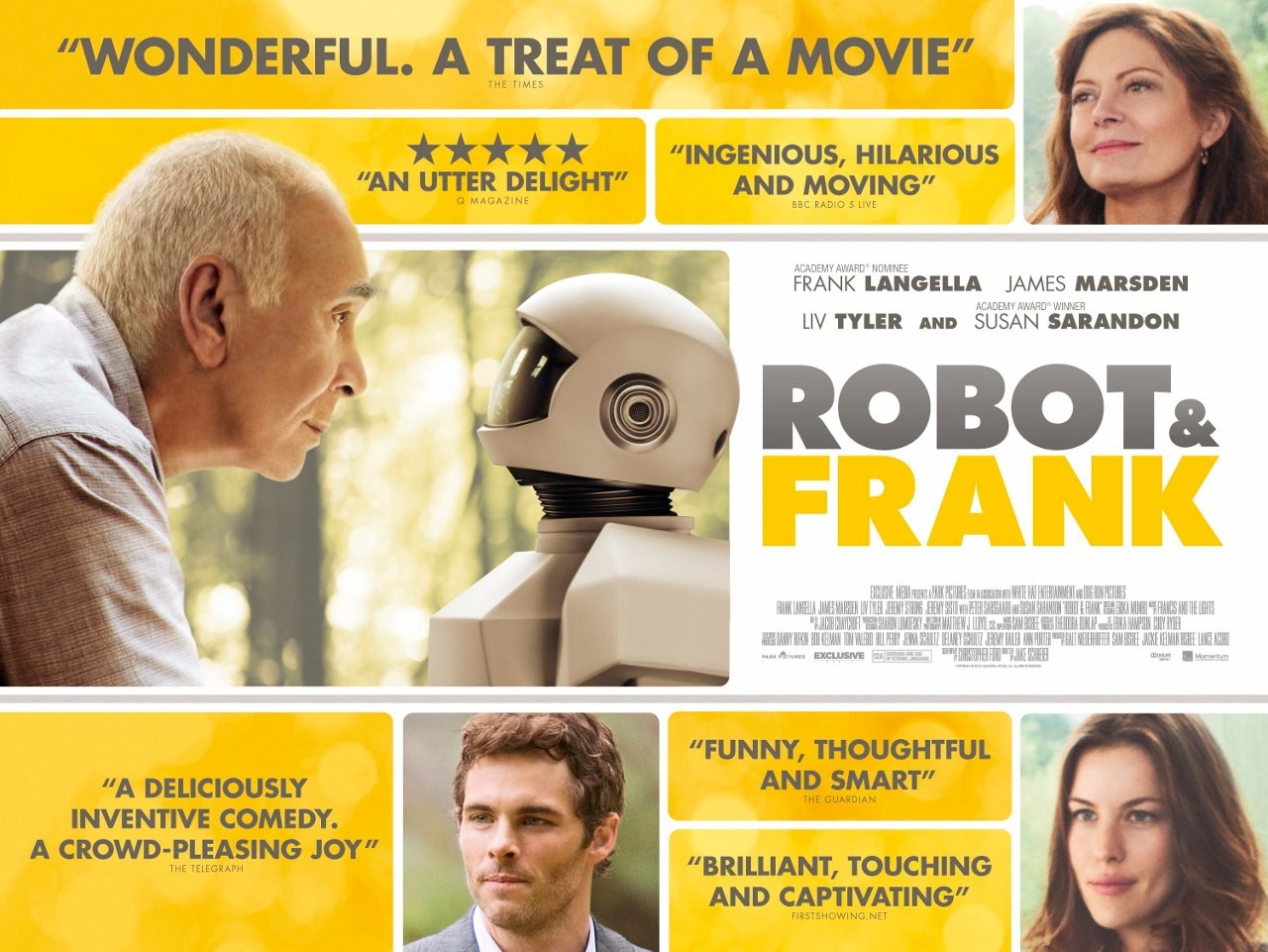
“Robot & Frank” is a small character film about a retired cat burglar and the robotic healthcare assistant purchased to assist him with his day to day activities. So when the retired burglar decides that he can use the robot to assist him with his day to day duties of cat burglaring, he comes out of retirement for his some good old fashion heisting. Meanwhile he tries to impress a lovely librarian and also has to deal with his oft-absent yet well meaning children who have different views on the use of robotic help aids.

This is an interesting movie because it is science fiction without really having to be so different or implausible. It is sci-fi like “Her” and “Eternal Sunshine of the Spotless Mind,” movies which use their science fiction premise to tell the stories of characters and their relationships to one another. And the fact that the main character is played by someone with the gravitas and talent, specifically Frank Langella, doesn’t hurt at all. He makes the character of Frank seem real and vital and he makes us care about him even though he comes across initially as an old curmudgeonly fogey.Continue Reading …

#94 – Halloweenie Roastidiso

http://media.blubrry.com/cinemacrespodiso/chriscrespo.com/wp-content/uploads/2014/10/CinemaCrespodiso_Episode94_27Oct2014.mp3

Podcast: Play in new window | Download | Embed

Subscribe: Apple Podcasts | Spotify | TuneIn | RSS

Episode94_HalloweenieRoastidiso(Right Click Download Link To Save)

In episode 94, Chris Crespo and Drewster Cogburn are joined by 4-time guest stand up (and sit down) comedian Pedro Lima a.k.a the Rican Gorilla (www.RicanGorilla.com) for this somewhat special Halloween edition of Cinema Crespodiso.

Chris and Drew review St. Vincent and John Wick. t

There’s a new Netflix Pick of the Week, a new Billy D’s Death at the Movies and more!

Also discussed in this ep:

Sharknado 3 lands in Orlando, early twitter reactions to Interstellar, Christian Bale is Steve Jobs, female director wanted for Wonder Woman, Terminator 5 news, 30th anniversary of Back to the Future, and so much more!

Continue Reading …

Review: ‘John Wick’

john_wick_poster

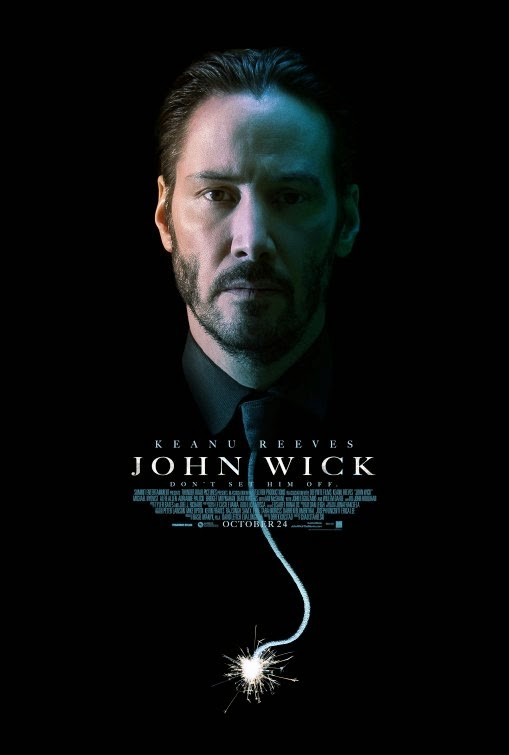
“John Wick” is a near-perfect action movie, in which they did so many things so well that it is kind of easy to overlook some of the smaller, silly flaws, things that would almost be nitpicking when compared to the great action, sweet cinematography, awesome build ups and pay offs, an interesting underworld, and the iconic bad ass character on which this whole thing is centered around, played perfectly by a guy who just doesn’t get enough credit when it comes to his body of work. Is “John Wick” the best action movie of 2014? I think that might be a given at this point, cause it really is awesome.

So there’s this guy named John Wick (Keanu Reeves) and he’s a retired hitman. At the start of the movie, his lovely wife is freshly dead due to some unnamed illness and the only thing he has left is his sweet antique muscle car. Oh, and the world’s cutest puppy, bought for him by his dying wife so he would have something to love and love him back after she had passed. And when some idiot Russian criminals decide to steal his car, beating him up and needlessly killing his puppy along the way, he finds himself a man at rock bottom, with everything he ever cared for taken away from him. What’s a retired, bereaved and wronged hitman to do in a situation like this? We all know. We’re right there with him. He makes a few inquiries, a phone call or two, he finds out the person responsible is the son of the head of the Russian mob in New York City, and, well, things escalate quickly from there.Continue Reading …

CCN – October 2014

http://media.blubrry.com/cinemacrespodiso/chriscrespo.com/wp-content/uploads/2014/10/CCN_Oct2014.mp3

Podcast: Play in new window | Download | Embed

Subscribe: Apple Podcasts | Spotify | TuneIn | RSS

CCNLogo_Nov2013(Right Click Download Link To Save)

In this Cinema-less BONUS episode, Chris Crespo and Drewster Cogburn talk about Hannibal Burress calling Bill Cosby a rapist, celebrities sue magazines for libel and win (or settle), fake news stories being passed off as real news, a man admits to not knowing how to use a toilet seat, another man asks his wife is she’s been shitting in the tub, and just a little more, so enjoy!

Continue Reading …

#93 – Things That Blow Your Mind

http://media.blubrry.com/cinemacrespodiso/chriscrespo.com/wp-content/uploads/2014/10/CinemaCrespodiso_Episode93_19Oct2014.mp3

Podcast: Play in new window | Download | Embed

Subscribe: Apple Podcasts | Spotify | TuneIn | RSS

Episode93_ThingsThatBlowYourMind(Right Click Download Link To Save)

In episode 93, Chris Crespo and Drewster Cogburn review The Book of Life and Fury.

There is a new Netflix Instant Pick of the Week (as well as brand new Netflix POTW theme song!), a new edition of Billy D’s Death at the Movies and so much more!

Discussed in this episode:

DC movies announced, Lego movie sequels, female Robin in Batman v Superman: Dawn of Justice, Interplanetary Unusual Attacking Team mistranslations, Paul Rudd helped write Ant-Man, Pacific Rim 2 & 3 news, Minecraft The Movie, Shawn Levy is not good, 2015 Oscars host announced and over 1 hour of IMAX footage in Interstellar.

Continue Reading …

  • Prev Page...
  • 1
  • …
  • 110
  • 111
  • 112
  • 113
  • 114
  • …
  • 153
  • ...Next Page

Copyright © 2026 · Pintercast Child Theme on Genesis Framework · WordPress · Log in