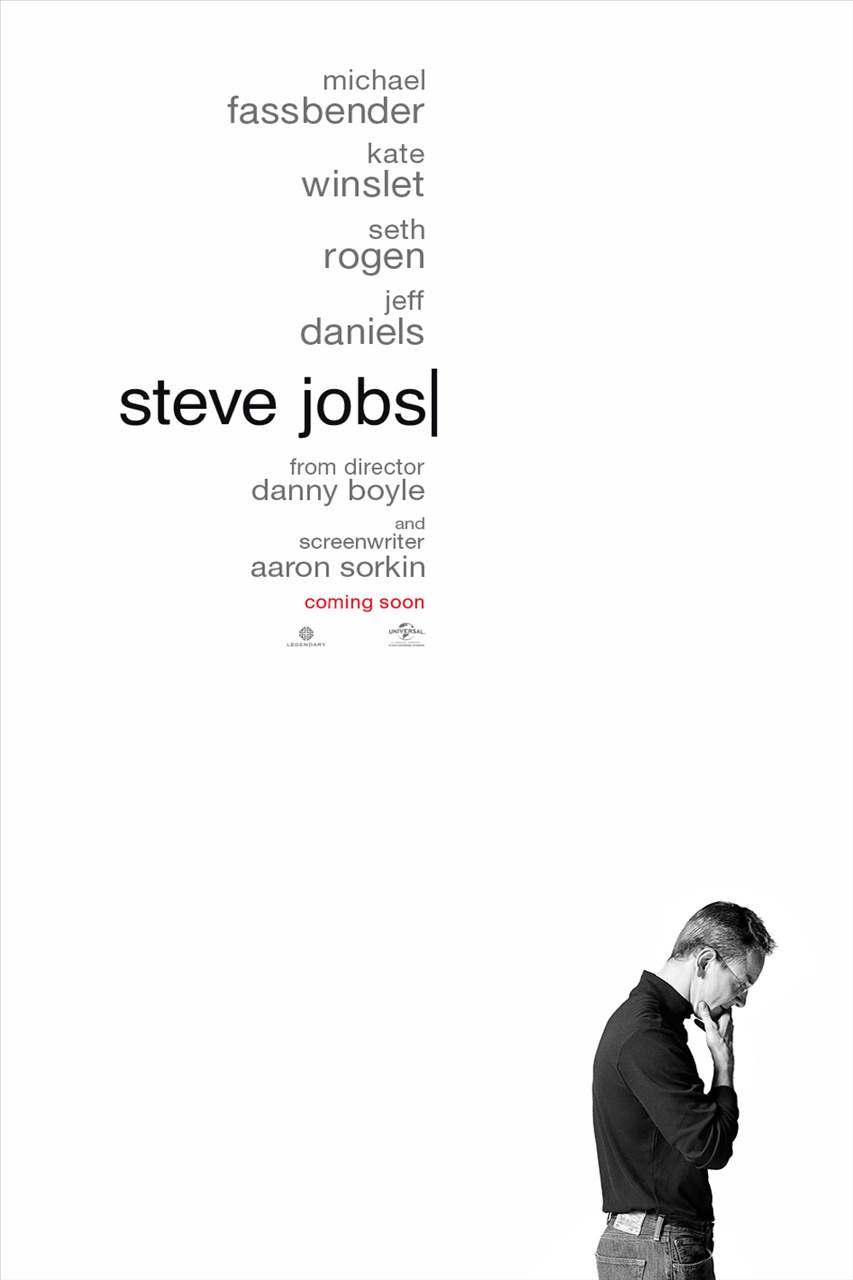
We’re all sick and tired of the same old biographical picture formula, right? It’s been done for years and we have seen it time and time again, regardless of whether the film’s subject is an athlete, a businessman, an inventor, an artist, it simply does not matter, we get the same thing over and over, which is to say, a “greatest hits” package of a person’s life, tracing their steps from childhood to as far as they can go, if not all the way to death. By shoving everything that happened to a person into a two to three hour movie means we just skim the surface, we get the superficial details, with very little insight, and then before we know it, the movie is all over. Might as well have just listened to music while reading a boring, by the numbers biography. But with “Steve Jobs,” this is not the case at all, a different tack has been taken, one that is very effective and which tells us more than the “birth to death” biopic could have told us.
Written by Aaron Sorkin and based on an authorized biography of the same name, “Steve Jobs” does not start with the person’s birth and childhood and work its way through his youth all the way to the end when he became one of the most popular people in the world through his work with Apple, but instead this movie cherry picks three very specific moments in the life of Steve Jobs and these three moments are actually quite similar, giving the movie a very interesting structure with which they were able to work in, and by limiting the scope of the story, Sorkin, director Danny Boyle and actor Michael Fassbender were all able to get way more out of this character and managed to tell the story of someone’s life without getting bogged down in all the extra details.Continue Reading …